TicorAgent ONE
- 4.4
- Rating
- 10.00K
- Installs
- Free
- Price

 Analysis by App-foxy
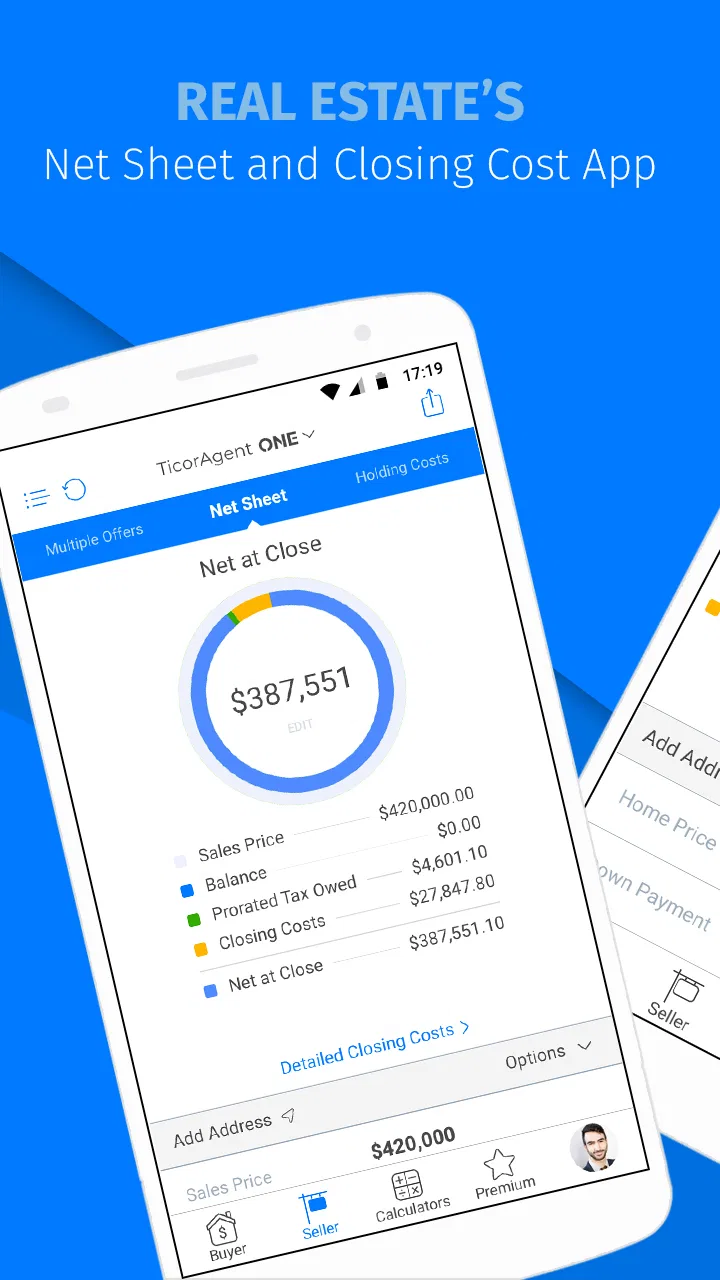
When I look at a finance app for real estate work, I want to know one thing first: does it help me handle the business side of a property transaction without getting in the way? That is the question I kept in mind while using TicorAgent ONE. It is built for real estate professionals rather than everyday personal budgeting, and that focus makes it more interesting than a general-purpose money app for the right user.
My overall impression is that this is a practical companion for agents who need a mobile point of access while moving between appointments, properties, calls, and paperwork. It is not the kind of app I would choose to replace a full accounting system, nor would I recommend it to someone looking for a household expense tracker. Its value comes from fitting into the working rhythm of real estate professionals.
The app is free to install, with optional in-app purchases ranging from under a dollar to about ten dollars per item. It is rated for Everyone, runs on Android starting with version 7.0, and the current release is version 4.8.5.1.5. PalmAgent is the developer, and the app has built a modest but established audience, with more than ten thousand installs and an average rating of 4.4 from dozens of ratings.
You May Also Like

 Blood Strike: 2.5 Anniversary
Blood Strike’s Loadouts Turn Every Drop Into a Tactical Gamble
A close look at Blood Strike’s custom loadouts: how fast access to signature weapons reshapes its battle royale rhythm, rewards preparation, and narrows the gap between fights.

 Pandora - Music & Podcasts
Pandora’s Music Is Easy to Start, but Harder to Recover
Pandora’s strength is its low-effort path from a seed to a station. Its weak spot is how much confidence it asks you to place in connection, setup, and quiet recovery.

 8 Ball Pool
 Is Built on Rivalries, Rematches, and Routine
A close look at the rivalries, rematches, shared routines, and unanswered safety questions that turn a quick pool match into a persistent mobile community.

 Samsung Music
’s Quiet Strength Is Playing What You Already Own
Its reach comes less from spectacle than from dependable access to a personal library. That simplicity is both the app’s strongest retention engine and its ceiling.

 AccuWeather: Weather Radar
AccuWeather Review: A Quick, Clear Forecast for Everyday Decisions
For everyday plans, the best forecast is the one you can understand quickly. AccuWeather makes rain timing, radar, and local conditions easy to act on, with a few trade-offs.

 Hill Climb Racing
Why Hill Climb Racing Still Turns Crashes Into One More Run
A tiny car, a bumpy hill and one more upgrade: Hill Climb Racing keeps resurfacing because its simple chaos makes every near-miss feel personal.
More From Our News Desk
View All News


Why a real estate-focused finance tool matters
The most important capability here is not simply having financial information on a phone. It is having that information presented in a context that makes sense to a real estate professional. An agent's work is split between client-facing activity and behind-the-scenes organization. A general finance app may be polished, but it usually assumes that the user is managing personal spending, a small household budget, or broad business accounts.
TicorAgent ONE takes a narrower path. Its purpose is connected to the commercial reality of real estate work, where an agent may need to think about transactions, professional activity, and money at the same time. That specialization is the reason I see more value in it than in a generic finance app for this particular audience.
In practice, a focused tool can reduce the mental switching that happens when an agent moves from a client meeting to an administrative task. Instead of opening a personal finance application and trying to adapt its categories to real estate, the user starts with an environment intended for the profession. That does not automatically make every task faster, but it can make the workflow easier to understand.
The distinction is especially useful for independent agents. Someone working alone often has to manage responsibilities that would be divided among several people in a larger office. A mobile app can become a convenient checkpoint during the day: review what needs attention, keep professional activity separate from personal finances, and avoid waiting until the evening to reconstruct everything from memory.
That is the capability I would pay attention to before downloading it: it is designed around the working needs of real estate professionals, not around generic personal finance habits. If that matches your job, the focused approach is its strongest reason to try it.
A useful companion, not a complete financial department
I would be careful about expecting the app to replace every tool used in a real estate business. A mobile companion can be valuable for access and organization, but serious bookkeeping, tax preparation, document management, and detailed reporting may still require other software or professional help. The app makes more sense as one part of a workflow than as the only system an agent uses.
This distinction matters because real estate finances can become complicated quickly. A transaction may involve several parties, changing timelines, professional expenses, and records that need to be retained carefully. I would use the app to stay connected to the day-to-day side of the business, while keeping a more formal process for records that must be reconciled or shared with an accountant.
That approach also protects against a common mistake: assuming that a convenient mobile interface is the same thing as a complete accounting solution. TicorAgent ONE is most appealing when it helps an agent stay organized in motion. It is less compelling if the goal is to build a highly detailed financial archive from one application.
How it fits into a real working day
The best way to understand the app is to picture an ordinary day rather than a perfect one. I might begin with several appointments, spend part of the morning traveling, answer messages between meetings, and finish the day with administrative work. In that situation, the value of a professional finance app is not dramatic automation. It is the ability to keep business information close while the day is still happening.
For example, after meeting a client, I could use the app as a prompt to review the professional activity connected with that part of the day instead of postponing everything until later. That small habit has a real effect: details are less likely to blur together, and I do not have to depend entirely on scattered notes, memory, or a late-night catch-up session.
The mobile format also suits the uneven pace of real estate work. Agents are rarely seated at one desk for an uninterrupted block of time. A tool that is available during gaps between appointments can be more useful than a powerful desktop system that is difficult to reach when the agent is away from the office.
I would still create a simple routine around it. Use the app at consistent points in the day, such as after a client meeting, when returning to the office, or before ending work. The particular timing is less important than consistency. The app becomes more valuable when it is part of a repeatable process rather than something opened only when a financial question becomes urgent.
One practical tip is to separate quick checks from end-of-period review. During the day, I would use the app for immediate professional awareness and organization. Later, I would compare the information with the records used for formal bookkeeping. This two-stage approach keeps the phone workflow light without treating it as a substitute for careful reconciliation.
The difference between access and control
A mobile finance tool gives me access, but access alone does not guarantee control. The real benefit comes from using that access to make better decisions sooner. If I can identify what needs attention while I am still in the middle of the workday, I am less likely to let small administrative tasks accumulate.
That is also where expectations should remain realistic. The app cannot remove the need for good habits. It cannot decide which records my business must retain, and it should not be treated as an automatic answer to tax or compliance questions. It can support a process, but the process still needs a human owner.
For a new agent, this may be particularly important. The app can encourage professional separation between personal money and real estate activity, but the user still needs to establish sensible categories, review information regularly, and understand what belongs in the formal business records. A tool is helpful when it reinforces those habits; it is not a replacement for learning them.
The strongest everyday scenario
I think the clearest use case is an independent real estate agent who spends most of the day outside the office and needs a professional finance reference point without carrying a laptop everywhere. This person may not need a large enterprise platform at every moment. What they need is a focused mobile tool that feels relevant to the work they are actually doing.
Imagine an agent moving from a listing appointment to a property showing and then to a call with a prospective buyer. Each activity creates a different kind of follow-up. The agent can use a quiet moment between commitments to check the professional side of the day, then return to client work without waiting until all appointments are over.
The advantage is not that the agent suddenly has no administrative work. The advantage is that the work is less likely to become one large, confusing task at the end of the week. Small checks can make the final review more manageable, especially for someone who works without an assistant.
A second useful scenario is an experienced agent who already has a desktop accounting process but wants a mobile layer for daily awareness. In that arrangement, TicorAgent ONE does not have to compete directly with the accounting system. It can serve a different purpose: keeping the agent connected to professional financial activity while away from the main workstation.
I would not recommend relying on it alone for a brokerage with multiple staff members, complex internal approvals, or extensive reporting needs unless it clearly fits the organization's established process. In those environments, a broader business platform may be better because collaboration, permissions, and detailed records can matter more than mobile convenience.
Three habits that make the focused approach more useful
First, I would use the app as a same-day checkpoint rather than a once-a-month reminder. Real estate work produces many small details, and reviewing them while the context is fresh is more useful than trying to rebuild the story later.
Second, I would keep the app's role clearly defined. Let it support daily professional organization, but maintain a separate formal recordkeeping routine. This avoids the trade-off between convenience and accuracy that appears when one lightweight tool is asked to do everything.
Third, I would test it during a normal busy week rather than judging it after a quiet afternoon. An app intended for real estate professionals proves its worth when the user is traveling, switching between clients, and handling interruptions. If it still feels easy to consult during that kind of day, it has earned a place in the workflow.
These habits are more important than simply installing the app. The focused design can help, but the benefit comes from matching it to the pace and responsibilities of real estate work.
Where the trade-offs become noticeable
The first trade-off is specialization. A real estate professional may appreciate the focused context, while a user who wants broad personal finance tools may find the app too narrow. If your main goal is tracking household spending, comparing bank accounts, planning a personal budget, or monitoring investments, a mainstream personal finance application will probably be a better fit.
The second trade-off is that mobile convenience can encourage shallow reviews. It is easy to glance at information and feel organized without actually checking whether records are complete. I would treat the app as a prompt for action, not as proof that the business books are finished.
The third trade-off concerns the optional purchases. The app is free to install, but some items cost between $0.99 and $9.99. That does not automatically make the pricing unreasonable, yet I would look carefully at what I need before paying for anything. A user who only wants basic access may be satisfied without spending more, while a professional who depends on additional capabilities should consider whether those purchases fit the value they get from the workflow.
There is also the practical question of platform age. Support for Android 7.0 makes the app accessible to users who keep older devices, which is useful for anyone who does not upgrade frequently. At the same time, people using newer phones may expect a very modern interface and highly refined behavior. I would judge the app by how reliably it handles my routine rather than assuming that an older minimum operating-system requirement means it will feel identical to the newest finance platforms.
The rating offers some reassurance, but I would not treat an average of 4.4 from a relatively small group of ratings as a guarantee that every agent will have the same experience. A finance app can feel excellent for one workflow and unnecessary for another. The relevant question is whether its real estate focus matches the way I work.
When another option is the smarter choice
I would choose a general accounting platform instead when I need detailed financial statements, robust reconciliation, extensive export options, or a process designed around an accountant. I would choose a personal finance app when the main concern is household money. I would choose a team-oriented real estate platform when several people need to collaborate on the same operational records.
TicorAgent ONE is more suitable in the space between those choices: a professional mobile tool for an individual or small real estate operation that wants a focused way to stay connected with its financial work. That middle ground is useful, but it is also why the app will not be the best answer for every reader.
Before committing to it, I would ask myself three practical questions. Do I work in real estate professionally? Do I need mobile access during a day spent away from a desk? Am I prepared to keep a separate formal bookkeeping process when necessary? If the answer to all three is yes, the app deserves a trial. If the answer to the first or second is no, its specialization may not offer much benefit.
Who gets the most from it
The strongest audience is the independent agent who wants a professional finance companion that fits around appointments and travel. This person benefits from a focused environment, a free starting point, and the ability to build a routine without immediately committing to a large business system.
It can also suit a small real estate team where each person needs a convenient personal checkpoint, provided the team already understands how formal records will be managed. The app's role should be agreed upon clearly so that quick mobile checks do not become confused with shared accounting or official reporting.
New agents may find it helpful because it encourages them to think about the financial side of the profession from the beginning. Still, I would pair it with guidance from a broker, accountant, or experienced professional. Learning the right process matters more than simply having an app available.
On the other hand, casual property buyers, renters, and people looking for a simple budget tracker should skip it. Its professional real estate orientation is not an advantage if it does not correspond to the user's work. Large brokerages with demanding administrative structures may also need something broader, especially when several people must access, review, and approve the same information.
After using it, I see PalmAgent's app as a focused tool rather than an all-purpose financial command center. Its best quality is the way it brings a real estate perspective to mobile financial organization. That can make a busy agent's day feel less fragmented, especially when the app is used as a regular checkpoint instead of a last-minute rescue.
My recommendation is straightforward: if you are a real estate professional who wants a free mobile starting point and values a work-specific approach, try it and test it during a genuinely busy week. Keep your formal records and broader business needs in view, and be selective about optional purchases. For the right user, the real win is not replacing every finance tool; it is keeping professional financial attention present while real estate work is happening.
FAQs for TicorAgent ONE
01What is TicorAgent ONE and who is it designed for?
TicorAgent ONE is a real-estate-focused mobile application designed to support agents with everyday business tasks, client communication, property-related information, and workflow organization. It is mainly intended for professionals connected with Ticor Title and its services, rather than casual home buyers. Before downloading, users should confirm that their brokerage, title representative, or account provides access to the platform and that the app supports their specific role and region.
02What features can I expect to find in TicorAgent ONE?
The app is built to place useful real-estate resources in one mobile location, helping agents work more efficiently while away from their desks. Depending on the account and market, available tools may include transaction or title-related resources, contact and communication support, educational materials, calculators, property information, and links to professional services. Features can vary by user permissions, updates, and local TicorAgent availability.
03Is TicorAgent ONE free to download and use?
TicorAgent ONE may be available to download without an upfront charge, but that does not necessarily mean every service inside the application is free or available to everyone. Access can depend on an agent’s relationship with Ticor Title, registration status, company permissions, and the services offered in the user’s area. It is best to review the store listing and account terms before relying on any specific feature.
04Do I need an account or professional credentials to use the app?
Many of the app’s professional tools may require registration, sign-in, or verification connected to a TicorAgent, brokerage, or title-services account. Some public information may be visible without logging in, but restricted features can require approved credentials. Users should have their business email or account details ready and contact their local Ticor Title representative if activation, password recovery, or permission issues prevent access.
05Is TicorAgent ONE available for both Android and iPhone?
TicorAgent ONE is intended for mobile use, but availability and supported versions can change as the developer updates the application. Before installing, check the official Google Play or Apple App Store listing for your country, supported operating-system requirements, developer information, and the latest update date. A stable internet connection may also be necessary for sign-in, synchronized data, online resources, and certain account-based features.
Pros
- Centralizes property listings
- contacts
- and daily agent tasks in one app.
- Mobile access helps agents respond to clients while away from the office.
- Can reduce manual paperwork through digital records and workflow tools.
- Useful for keeping client and transaction information organized.
- Designed around real-estate workflows rather than generic productivity features.
Cons
- Some features may require an active account or access from a supported agency.
- The interface can feel complex for new users unfamiliar with real-estate software.
- Performance may depend on internet connectivity and server availability.
- Advanced tools may be unnecessary for occasional or independent agents.
- Users should review its data permissions before storing sensitive client information.

TicorAgent ONE
Gallery